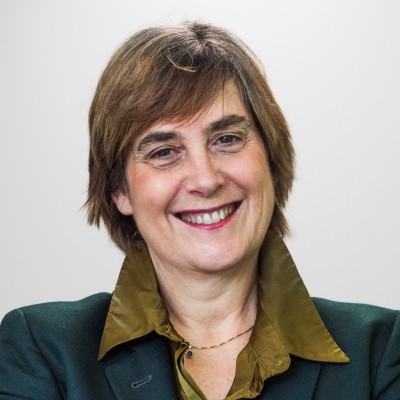
What if innovation doesn’t just depend on technology, but also on who develops it? This question is at the heart of Françoise Chombar’s (Melexis) keynote at Advanced Engineering. With her talk on STEMinism and Womenomics, she aims to challenge engineers and business leaders to rethink innovation, talent, and competitiveness.
“Companies often talk about innovation, but rarely about inclusion and diversity as its driving force,” Françoise notes. “And yet, that is where a huge opportunity lies.” She fundamentally disagrees with the idea that European industry is currently trapped between the U.S. in the West and China in the East. On the contrary, she sees a clear opportunity.
“Time to stop complaining and start leveraging our advantage.”
“We are almost the last bastion of democracy and inclusion. In countries where women still hold an inferior position, they deliberately choose STEM education to gain independence. If we attract that talent and give them opportunities, we can not only address our shortage of technical profiles but also move faster toward gender balance. Time to stop complaining and start leveraging our advantage.”
How Inclusion Drives Innovation
Françoise Chombar supports her point with a clear business case, turning diversity into not a ‘soft’ topic, but a direct lever for innovation. “Companies that do not consciously invest in diversity limit their own innovation capacity. If you want innovation, you need different perspectives. Teams that are too homogeneous tend to think in the same direction and miss alternative solutions and ideas.”
With the term STEMinism, she deliberately links technology and inclusion. It’s not just about gender, but about how organizations handle talent in the broadest sense. “STEMinism is about how we, as a society, deal with people, their talents, and how we can help them flourish for everyone’s well-being—and for innovation.”
She notes that this is still a significant blind spot, especially in technical sectors. “Many companies are not actively addressing this. They build solutions but rarely pause to consider who is at the table. That’s detrimental, because inclusivity and diversity create the magic of innovation.”
The ROI of Diversity
Beyond innovation, there is also a purely economic logic. With Womenomics, Françoise refers to the idea that companies perform better when they reflect their market.
“As a product developer, your end market is usually very diverse. But when you look at companies and their teams, that reality isn’t reflected. You’re missing the opportunity to truly understand your market.”
“Diversity is a means to achieve better results.”
This affects everything—from product development to marketing and sales. “If you want to develop products that resonate with a broad audience, you need a broadly composed team working on them. Otherwise, you miss crucial insights that show up in sales figures. Diversity is not an end in itself here; it is a means to achieve better results.”
From Awareness to Action
Françoise also offers practical tools to turn this mindset into action. The first step is awareness, but it shouldn’t stop there. “Leaders need to actively communicate this mindset and act on it. Only then can you identify bottlenecks: in hiring, career progression, or retention.”
These bottlenecks often lie in small, almost invisible mechanisms that have a big impact on who you attract and retain. Even the wording in job postings can make a difference. “The language used in technical and innovative job postings is often very masculine, which puts off many women. If you choose gender-sensitive wording, you also appeal to women—without deterring men.”
At the same time, much of the solution lies in highlighting what already works. “Teams that are already diverse and embrace it tend to excel faster in innovation. There’s a lot of evidence for this, but it’s underutilized. Making these examples visible and including people in them creates role models. And these role models are what encourage others to follow.”
Inclusion as a Success Factor
These concrete examples and insights form the throughline of her Advanced Engineering keynote. Françoise aims to provide practical tools—not just another abstract talk on diversity, but actionable insights that companies can implement immediately and that have real impact.
“I’m telling a story of opportunity and hope. The talk will show that an inclusive approach to your operations will make you more successful.” With that insight, she hopes the audience will reflect when they return to the workplace: “Does my team reflect the market I serve? If not, what does that mean for my innovation capacity and results? And how can I change that?”
Why STEMinism and Womenomics are a mighty twin for Europe’s future
Thursday, May 7
10:30 – 11:00
Main Stage