Whether your role is managerial, commercial or technical, there is a strong interest in ensuring that the PCBs you design, buy or assemble achieve the lowest total cost — sustainably and without compromising functionality or reliability.
In fact, 80–90% of the total cost is built into the product early in the design phase, before the PCB supplier or EMS company even sees the design. Many of these early cost drivers also have a direct impact on sustainability.
Hard costs and soft costs
At NCAB, we group cost drivers into two categories: hard costs and soft costs. Hard costs relate to the physical PCB itself and include factors such as copper weight, build complexity and material choice. Their impact on cost and sustainability is often clear and measurable.
Soft costs are less visible but just as important. If not managed early, they lead to delays, rework and unclear requirements. That drives cost upward and increases the risk of missing the required quality or long-term reliability. In our view, that is not sustainable PCB production.
Involve your board supplier early
For hard costs, the principle is simple: only specify what you actually need. Avoid finishes, materials or tolerances that are not required. Every design choice affects the final price. That’s why we recommend involving your PCB supplier as early as possible. Once a design reaches the factory, it is often too late to make changes without adding cost and delays.
For soft costs, the key is to remove uncertainty early. The most critical driver is missing or incomplete information. Without the right data, quotations are delayed, and pre-production engineering becomes inefficient. This leads to repeated reviews, engineering questions and late changes.
The result is lost time which for new projects, often means delayed time to market and higher overall cost.
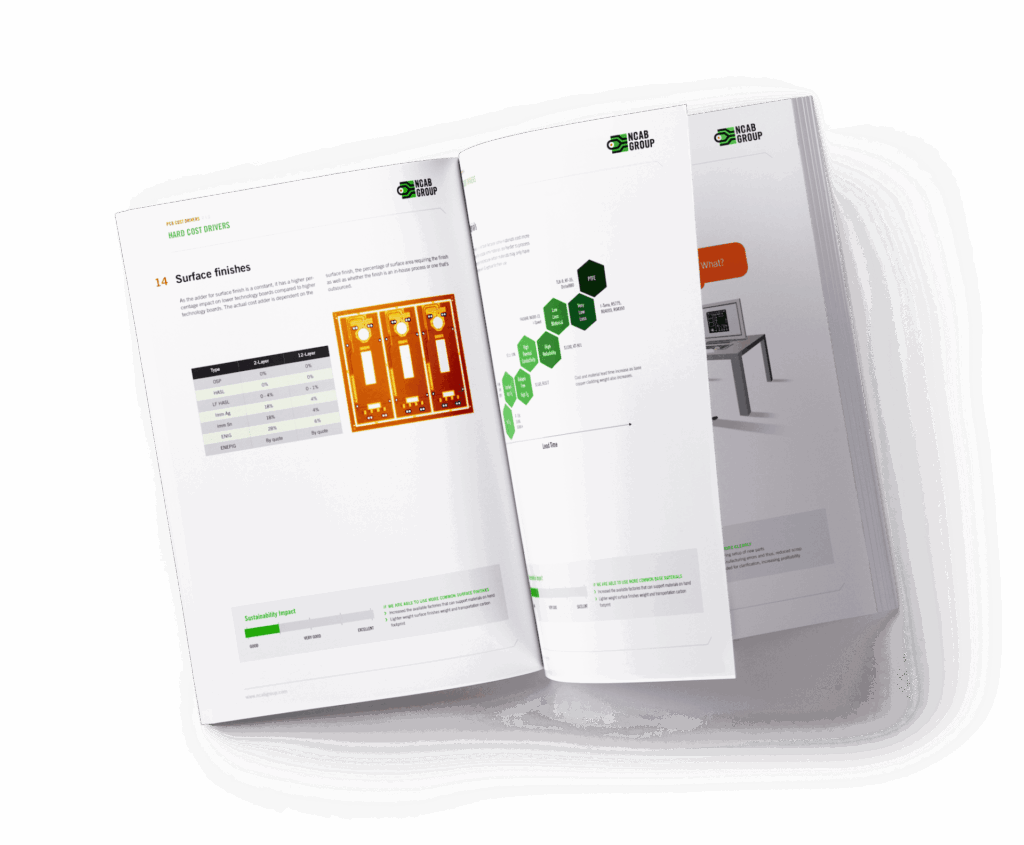
To avoid large cost drivers, we have developed our PCB cost driver tool that can support you in getting the board more cost efficient and sustainable. In the Sustainability Impact meter, you can see the possible effects for each cost driver.