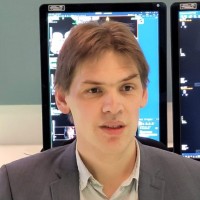
Innovation is not a coincidence, but neither is it an exact science. Barco has been proving this for more than 90 years: it has evolved from a radio company to projectors and cinema technology to medical imaging and, today, the implementation of artificial intelligence. During Advanced Engineering, Tom Kimpe, VP Technology & Innovation at Barco Healthcare, will take the audience behind the scenes of that innovation story.
In his lecture, Kimpe shows how Barco has reinvented itself time and again, tapped into new markets and structurally embedded innovation in the organisation. “We have been around for 91 years now, and our history proves that with the right strategy and courage, you can innovate successfully and keep reinventing yourself,” says Tom. “At Advanced Engineering, I will give an insight into our successful way of working and back this up with some concrete cases from the healthcare world.”
From hardware to AI
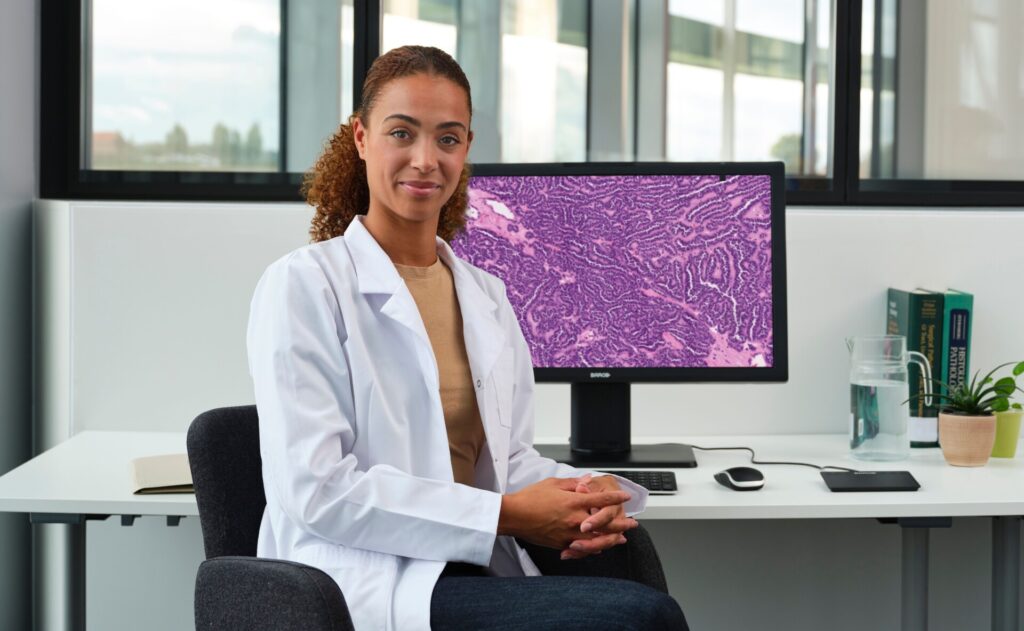
Tom takes you back to 2021 with his first case. “That project focuses on the development of an optimised display for digital pathology in collaboration with IMEC,” Tom reveals. “It shows how our hardware expertise, combined with academic knowledge, led to unique solutions for the medical sector.”
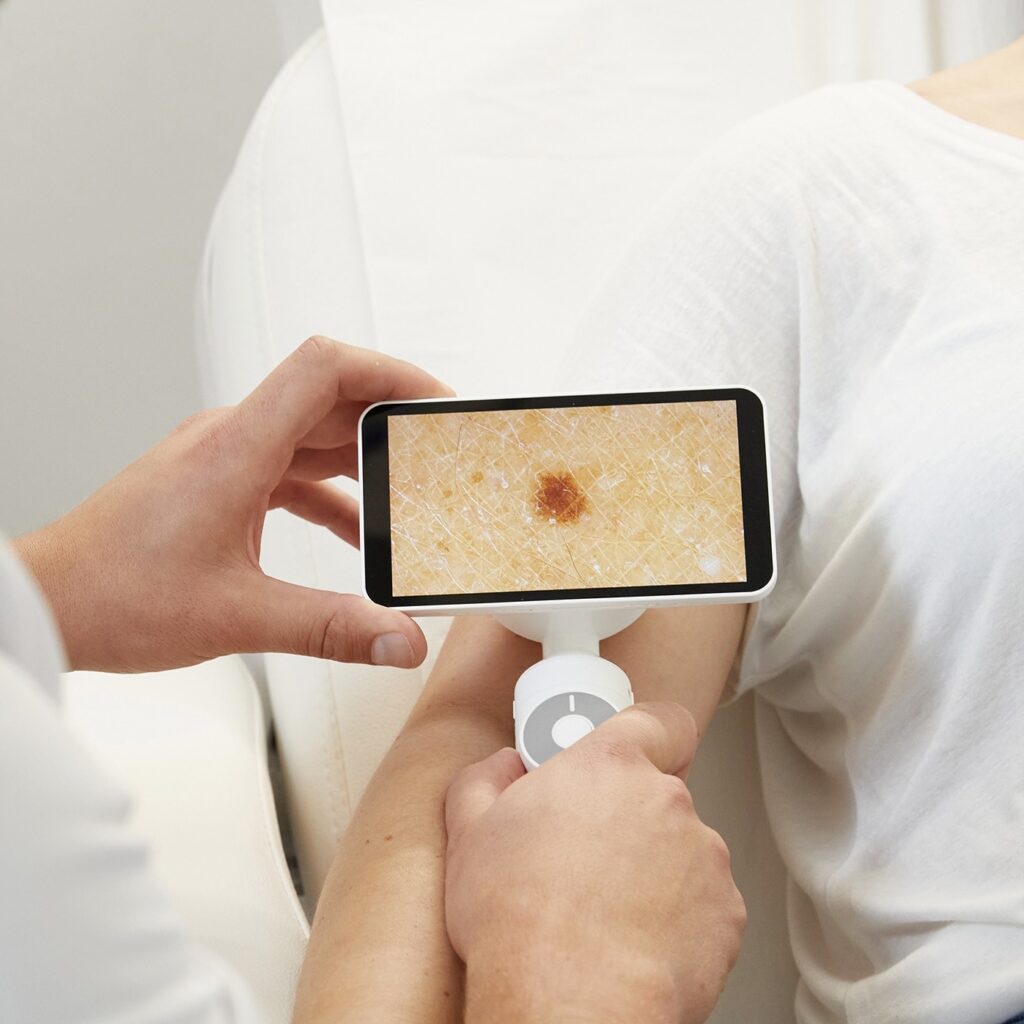
Kimpe also focuses on two more recent initiatives. One of these is Demetra, a digital dermatoscope that assists doctors in assessing skin lesions.
“By implementing AI, our technology helps to assess the likelihood of skin cancer and determine the appropriate follow-up or treatment.”
Finally, Tom highlights SlideRight QA: a software product launched in September last year that is used in pathology laboratories to automatically check the quality of digital pathology images using AI.

Innovating like a start-up
In addition to these specific cases, Kimpe also delves deeper into the innovation process behind the scenes. At Barco, a clear distinction is made between improving existing products and developing entirely new opportunities. Separate teams function as internal start-ups for the latter.
“New ideas have to be pitched to an internal board, in the same way a start-up would do with a venture capitalist. Only when the idea is convincing are (substantial) budgets released. The result is a kind of internal innovation market where teams are forced to think sharply, make choices and dare to focus on disruption.”
This approach has its advantages and challenges. “At Barco, we have a strong structure, scale and support, but at the same time we have to make choices in a context where ideas outnumber the available resources. It is precisely this tension between certainty and risk that makes innovation so complex, but also so necessary.”
Do not be overly cautious
According to Tom, his message is particularly relevant for medium-sized and large companies. At a time when the competitiveness of European companies is under pressure, continuing to invest in innovation is more necessary than ever. At the same time, he warns against an overly cautious approach.
“If 80 to 90 per cent of your innovation projects are successful, you’re not really innovating,” he says bluntly. “Failure is part of innovation. The fact that only one in three or four ideas is successful is not a problem, but proof that you are pushing boundaries and daring to surprise.”
“If 80 to 90 per cent of your innovation projects succeed, you are not really innovating.”
Kimpe also points out the importance of innovation within larger, locally based companies. “Flanders may be proud of its start-up ecosystem, but too often promising technologies disappear abroad through acquisitions, whether or not due to a deliberate exit strategy. We should not discourage this, but rather turn it into a ‘both-and story’. We should not leave innovation to start-ups and must also dare to push the boundaries towards real innovation within established companies that are anchored here.”
During his lecture, Tom Kimpe will share insights from Barco’s many years of experience. How do you organise innovation in a strategic way? How do you make room for risk without undermining your core business? And how do you ensure that innovation pays off?
Anyone who works in engineering, technology or product development and wants to understand how innovation really works within a large organisation should not miss this session at Advanced Engineering. Thursday 7 May at 11 a.m. on the main stage at Flanders Expo Ghent.