
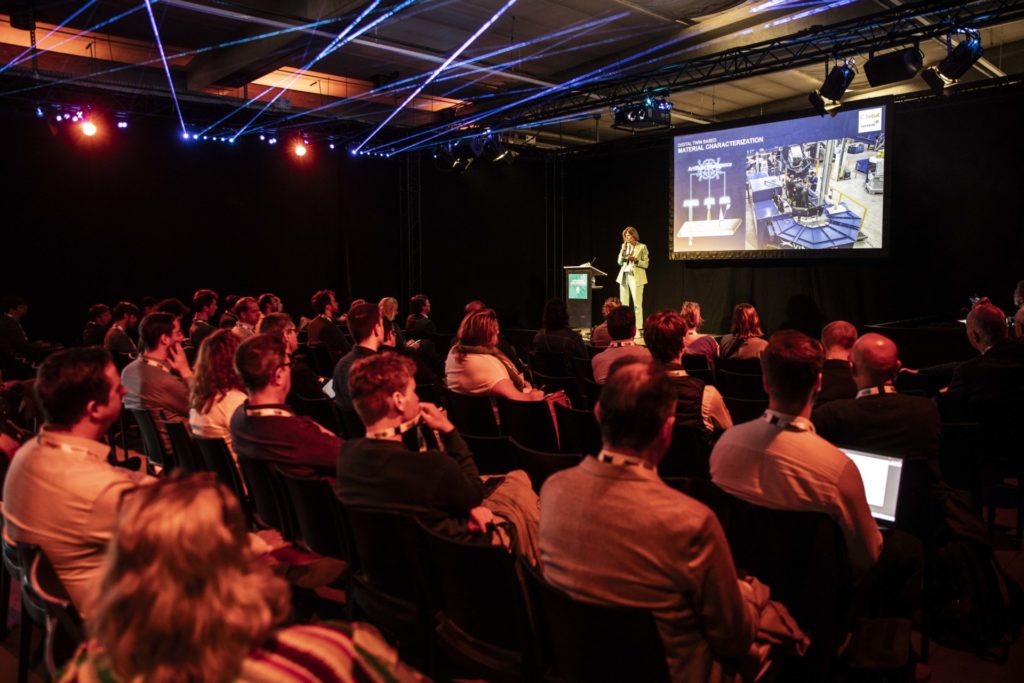
Does AI make our lives better? “Yes,” many answer with conviction. Karen Boers shares this enthusiasm but urges us to remain critical. During her lecture on Wednesday, May 21, at Advanced Engineering, she warns about the pitfalls of AI and how this rapidly evolving technology can be used in the right way.
AI for the manufacturing industry
“AI holds enormous potential, but there’s also a ‘but’ attached,” warns Karen Boers. Karen has already realized several projects with major societal impact, such as BeCode, BeCentral, Startups.be, and the European Startup Network. She is currently working for the research institute FARI in Brussels.

“At FARI, we gather as much expertise as possible on AI, data, and robotics within the Brussels universities VUB and ULB. From a holistic perspective, we analyze the opportunities and challenges. We first ask ourselves whether AI is even the best solution for a given problem and then examine how we can implement that solution responsibly and sustainably.”
AI is also widely used in the manufacturing industry, primarily to enhance safety and automate processes. But this raises concerns.
“As many know, a ChatGPT search consumes 25 times more energy than a Google search. If we use AI for every simple task, the costs and impact will quickly add up. The same principle applies in a factory setting—AI and robots must be deployed consciously and efficiently,” Karen explains.
Besides sustainability, potential job losses are a major concern. “However, studies show that AI will actually create more—albeit different—jobs. People can be assigned to real value-adding applications, which often bring more satisfaction than repetitive assembly line work.”
Inform and Implement
How can we harness AI optimally and responsibly? Karen shares three key pieces of advice:
1. Stay informed and be critical of sources
“Keep learning about AI’s impact and long-term consequences. But be critical! Many parties have commercial interests in rolling out as many AI applications as possible. Seek independent and objective expertise.”
2. Involve all stakeholders
“Implementing AI is not something you do blindly; it’s a strategic, impactful decision that requires time and investment. Ensure that everyone at every level of your organization is well-informed and actively involved. Make it clear that it’s a process of trial and error, address questions, and debunk misconceptions. Proper change management makes the transition much smoother.”
3. Quickly achieve a first success
“Don’t get stuck in endless discussions about theories and concepts. Pick something practical, test it, learn from it, improve it, and create positive change!”
During her lecture on Wednesday, May 21, at Advanced Engineering, Karen will delve deeper into AI’s potential and how to maximize its benefits. A must-attend event for those looking to the future. Will you be there? Register now!